GuideofEngland.com
Independent guides for the modern tourist
GuideofEngland.com
Independent guides for the modern tourist
Christchurch, Dorset ; an independent tourism guide for 2026
Most English market towns get a parish church. Christchurch got something closer to a cathedral, a 12th-century priory that runs longer than most of them, sitting at the mouth of two rivers where they slip out to sea past Hengistbury Head. The town that grew up around it is quieter than its great church suggests, a low-rise harbour town of riverside walks, swans on the Stour, and small boats moored along the Quomps.
Christchurch is quietly cherished by locals and barely registered by visitors. They head for Bournemouth five miles to the west, or push on to the New Forest and Lymington, and miss what is, to my mind, the smarter base of the three. Smaller and calmer than Bournemouth, easier to reach than Lymington, and walking distance from a beach worth the trip on its own.
The town today is affluent, gentle, and a touch elderly. Christchurch is regularly cited as having one of the highest proportions of retirees in Britain, and the pace reflects that. Livelier towns push out cocktail bars and stag weekends, Christchurch offers an afternoon of swans on the Stour, a slow lunch by the river, and a wander through the Priory grounds. Perfect.
Highlights of Christchurch
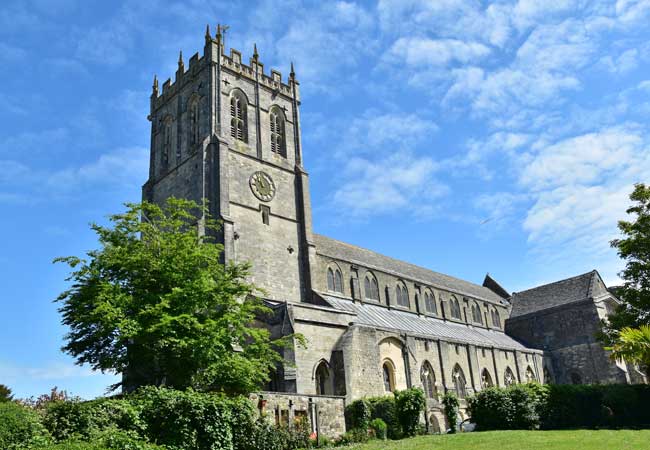
Christchurch Priory: The 12th-century church that gives the town its name. Larger than the cathedrals at Oxford, Bristol, and Chester, and the most surprising building of its size in any English market town. Worth an hour, even if churches are not usually your thing.
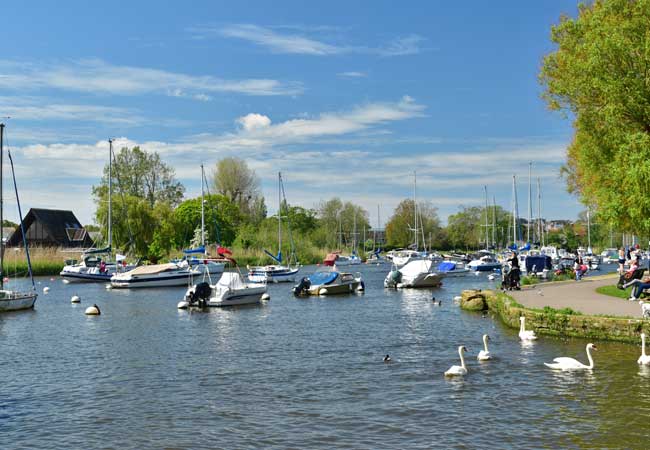
The Stour and the Quomps: The river that runs along the southern edge of the town, lined with plane trees, small boats, and on a summer afternoon half the families in Christchurch. The view that defines the place.
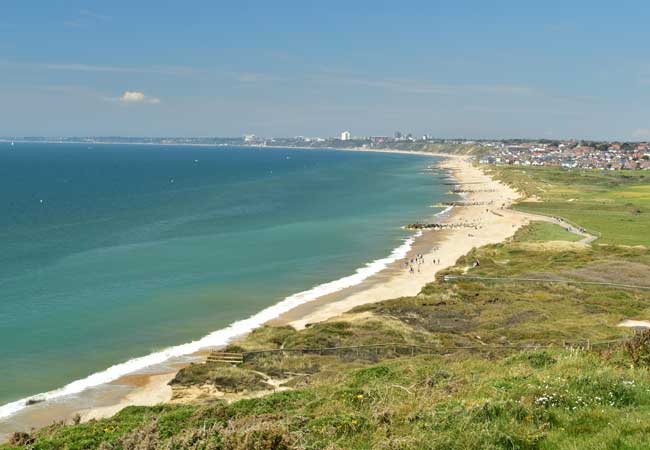
Hengistbury Head: A low headland closing the eastern side of the harbour, with cliff walks, sandy beaches, and long views back across the water. Two thousand years ago this was a major Iron Age trading port, with Italian wine and figs landing here from across the Channel. Today it is the best two-hour walk on the Dorset coast.
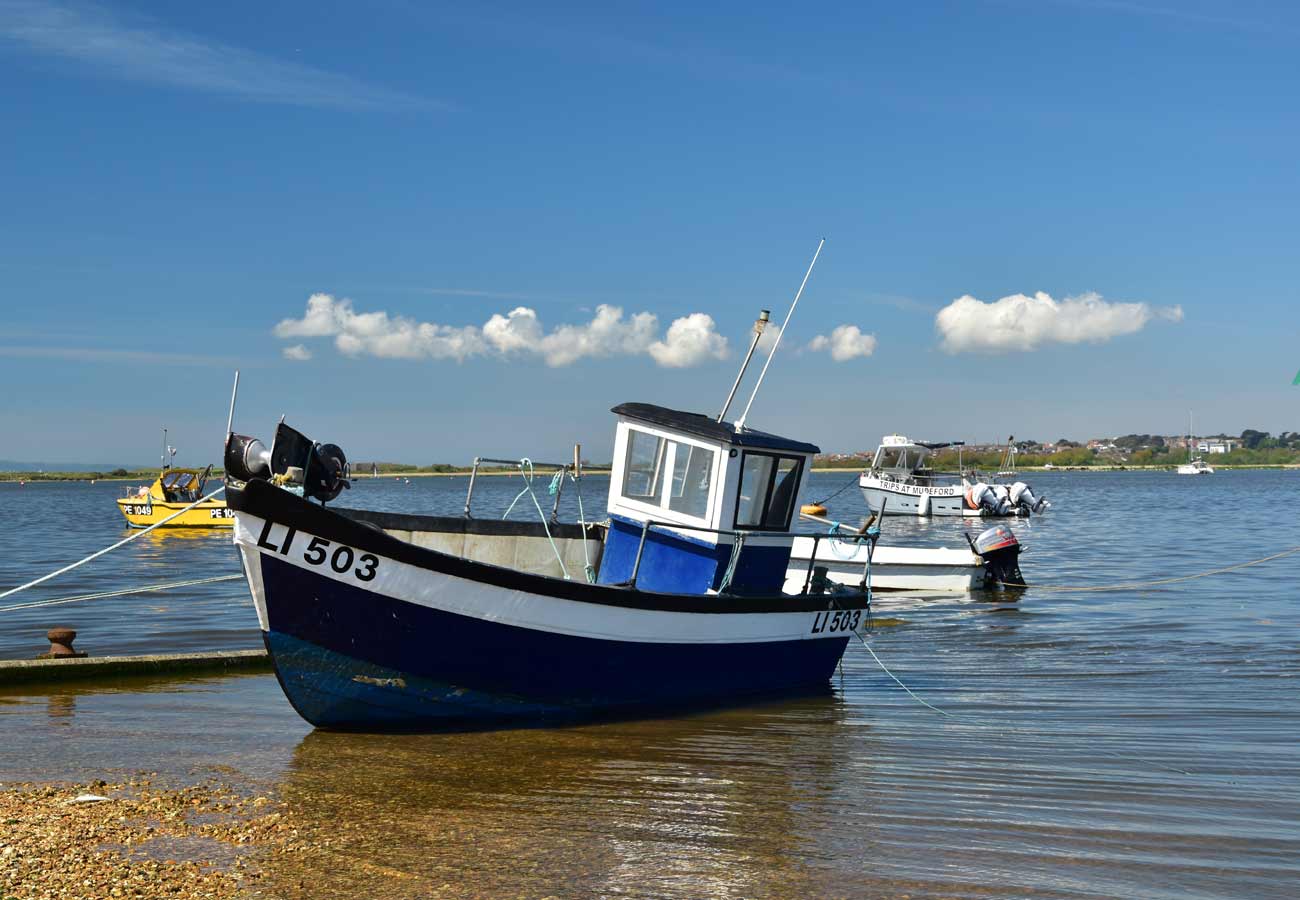
Mudeford Sandspit: A long sandbar of pale sand reaching out from the headland, lined with the most expensive beach huts in Britain. Reached by ferry, by land train, or on foot for those willing to walk it. The prettiest stretch of sand on this part of the coast, by some distance.
Note: Christchurch harbour is best visited from Mudeford quay (guide here)
A day trip to Christchurch
A day trip to Christchurch falls into one of three patterns: the historic town centre, Hengistbury Head, or Christchurch Harbour from the Mudeford side. With a single day you should pick one of the three, with two days you can do all of them comfortably.
The town itself is small and walkable. Two hours covers everything the casual visitor will want to see, with the Priory at the centre, the river running along the southern edge, and a tight grid of shopping streets in between. The Hengistbury Head walk is the half-day option: head out along the harbour shore, climb to the viewpoint at the top of the headland, and come back along the beach side, with a stop at Mudeford Sandspit for lunch.
The harbour itself is the trickiest of the three to visit. Stanpit Marsh and Wick Meads cut it off from the town, and you cannot simply walk down to the water from the centre. The proper way to see the harbour is from Mudeford Quay on the eastern side, which I have written about separately here.
The interactive map below shows a suggested walking tour of the historic centre. The green line is a 3.5km route through the town, taking around two hours at an unhurried pace.
Sights of the tour: 1) Quomps Park 2) Ferry to Mudeford Sandspit 3) Place Mill 4) Convent walk 5) Norman House 6) Christchurch Castle 7) Ducking Stool 8) The Regent Centre 9) Christchurch Priory 10) Red House Museum 11) Quomps Splashpark (for children and free) 12) Stour River view
Around Christchurch: 13) Hengistbury beach 14) Hengistbury head viewpoint 15) Mudeford sandspit beach 16) Mudeford Quay 17) Southbourne Beach 18) Stanpit Marsh 19) Highcliffe Castle
Note: zoom in and out on the map to see more detail
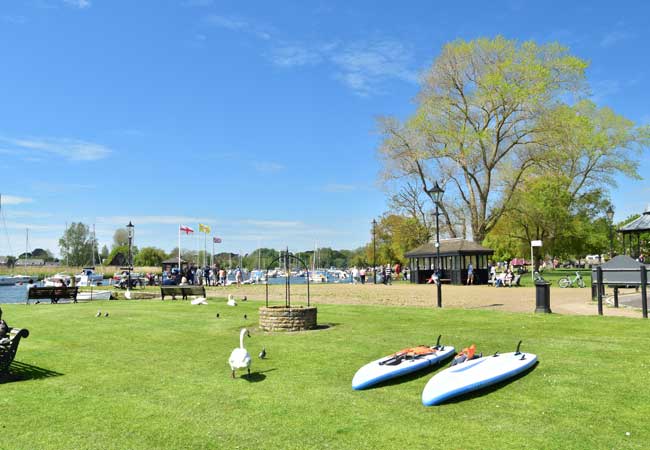
Quomps Park is always a hive of activity on a summer’s day
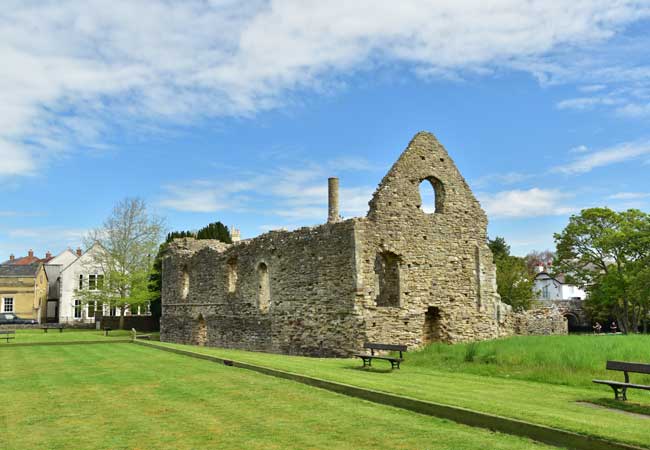
The ruins of the Norman house, sit on the banks of the Avon River
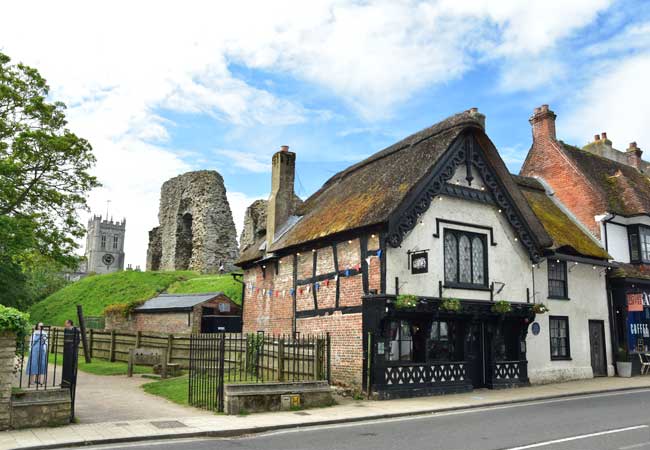
The historic centre of Christchurch
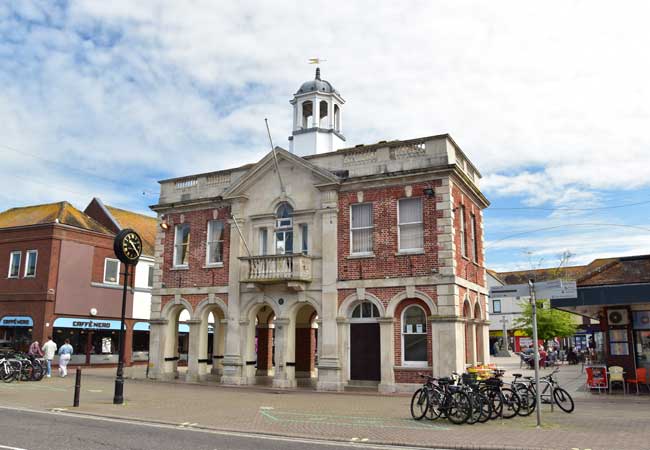
Saxon Square is the main shopping centre of Christchurch, but like many small English towns, most of the shops are coffee shops, estate agents or charity shops….
The beaches of Christchurch
Christchurch sits at the eastern end of Bournemouth Bay, and the beaches on this stretch of coast are the best argument for staying here.
Hengistbury Beach runs the length of the western side of the headland, and it is the one I would point you towards first. Soft sand mixed with shingle, clean water, and a backdrop of cliffs and grassland rather than concrete promenade. It rarely gets busy, partly because most visitors to the headland come for the walks rather than the beach. The one caveat is the wind. Hengistbury faces straight into the prevailing south-westerlies, and on a blustery day the sand will travel further than you do. Check the forecast first.
Related articles: Hengistbury Head
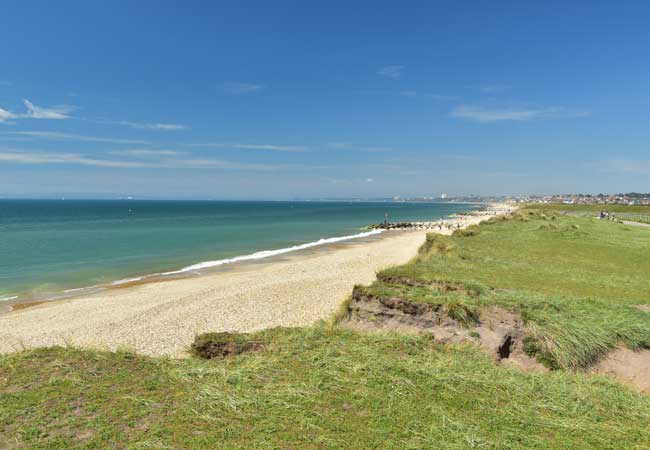
Hengistbury Beach on a still day. On a windy one, plans change.
A little further west, Southbourne Beach picks up where Hengistbury ends and continues the sandy run all the way to Bournemouth. This is where the colourful beach huts and the proper promenade begin.
On the eastern side of the headland, Mudeford Sandspit is the picture-postcard option. A long sandbar of fine sand, sheltered from the wind by the headland behind it, and lined with the famous beach huts. The catch is access. The ferry from Christchurch Quay takes around forty minutes each way, which makes a beach day a longer commitment than you might expect. If a beach is the priority, drive or take the bus to Mudeford Quay and cross from there. The crossing is barely five minutes.
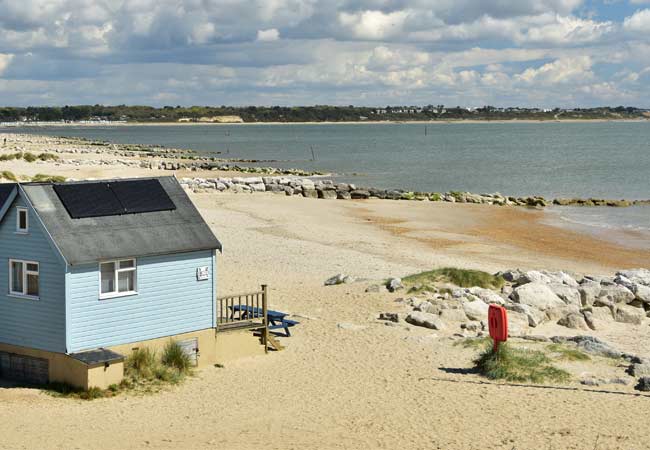
Mudeford Sandspit, with the beach huts lined up behind the dunes.
Christchurch Priory
The Priory is the reason most visitors come to Christchurch, and it should be. At 311 feet long it is one of the longest parish churches in England, larger than several actual cathedrals, and it sits on a site that has been a place of worship for around thirteen hundred years. The first time you walk in, the scale catches you out. Parish churches are not meant to feel like this.
The building's name comes from a story rather than a saint. During the 12th-century construction, a key beam was miscut, the kind of mistake that would have cost the carpenters dearly. They went home that evening expecting the worst. When they returned the next morning, the beam was perfectly fitted in place, and the mysterious extra carpenter who had been working alongside them all week was nowhere to be seen. The work was attributed to Christ himself, the town changed its name from the older Twynham to Christchurch, and the Priory has carried the name ever since. Whether you believe a word of it is up to you. The story is what stuck.
The structure you walk into today was built in stages. The Norman work was begun in 1094 by Ranulf Flambard, chief minister to William II, and the basic cruciform shape was in place by around 1150. The nave roof was raised through the medieval period, the Lady Chapel was added at the east end with its remarkable pendant vaulting (thought to be the first of its kind in England), and the west tower was rebuilt in the 1470s. There is no spire. The original wooden one is said to have collapsed in a storm in the early 15th century, and the tower that replaced it is what you see now.
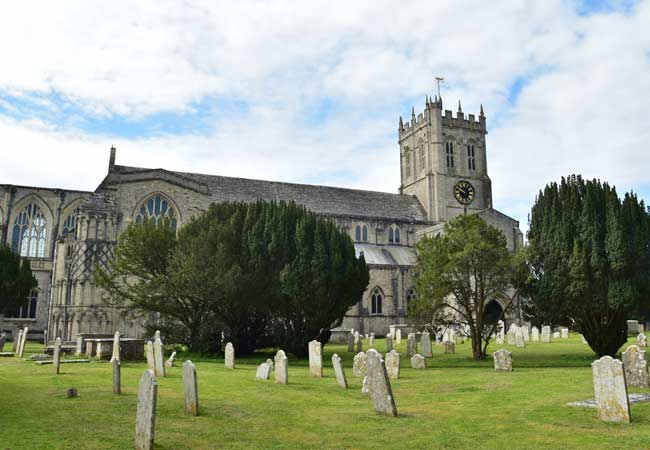
Christchurch Priory is the longest church in England, so much so that it does not fit in one image
A few things to look out for inside. The Norman nave, with its heavy round arches, gives way to lighter Perpendicular Gothic at the east end, and the contrast between the two is one of the more striking spatial moments in any English church. The Lady Chapel vaulting rewards a few minutes spent looking up. And on the exterior, recently added among the gargoyles, is a stone carving of an NHS worker in a face mask, placed there in 2021 in tribute to the pandemic effort. It is the kind of detail that tells you the Priory is still a working church rather than a museum piece.
Entry is free, though a donation is asked for and the building deserves it. Allow an hour. If you have any interest at all in church architecture, allow longer.
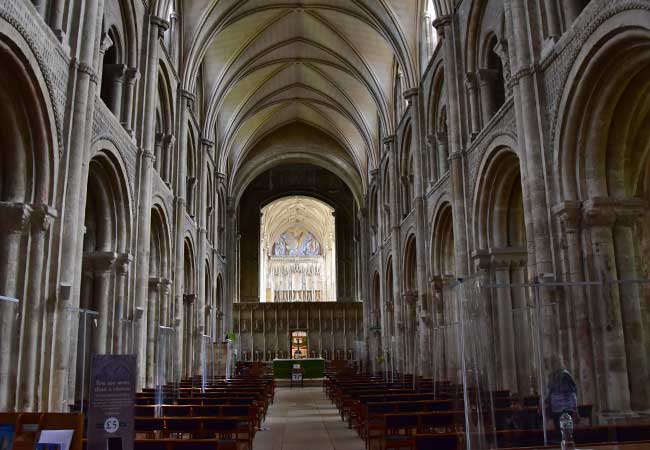
The sombre main chapel with the lighter 15th-century “lady chapel” to the rear
Ducking Stool
Tucked away by the millstream is the replica Ducking Stool, a curious little reminder of medieval justice. The original device worked like a seesaw, lowering the seated offender into the Avon. It was used for what we would now call public humiliation rather than serious punishment, with women accused of "scolding" and dishonest tradesmen the most common targets.
Christchurch's last recorded ducking was in 1806, and the replica went up in 1986. It is not a major sight, but it is the kind of small, slightly odd detail that makes a wander through the town worth slowing down for.
Mudeford Sandspit and the ferry
Mudeford Sandspit is the long sandbar on the south-eastern side of the harbour, sheltered behind Hengistbury Head and lined with the most expensive beach huts in Britain. Prices have climbed steadily for a decade. Huts that traded for £200,000 in 2018 now change hands for £350,000 to £400,000, with the better ones (sea-facing, recently rebuilt) listed above £450,000. They have no mains water, no electricity, and a communal toilet block at the end of the row. You are paying for the location, and only the location.
A relaxing way to see them is the wooden ferry from Christchurch Quay, which crosses the harbour to the Sandspit in around forty minutes. A return is £9. There is a shorter version that runs upriver to Tuckton for £6.50, which is a pleasant hour on the water if the weather is on your side.
If a beach day rather than a boat ride is what you have in mind, drive or take the bus to Mudeford Quay and pick up the much shorter ferry from there.
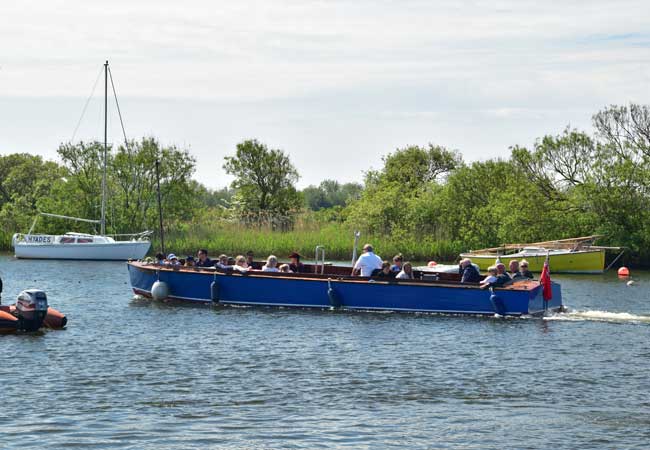
The ferry Mudeford Sandspit
Christchurch as a holiday base
Christchurch is not the obvious choice for a week on the south coast. It does not have the seafront hotels of Bournemouth, or the yachts of Lymington. What it does have is calm. If you are travelling with young children or older parents, or simply want a base that does not require shouting over a stag party at dinner, this is the better choice.
The food and drink scene is quietly excellent, lifted by the wealth of the surrounding area. There are good independent cafés, a handful of serious restaurants, and pubs that take their food seriously rather than relying on a sea view to do the work for them. Saxon Square, the main shopping street, will not detain you long. As with most small English towns it has settled into a rhythm of coffee shops, estate agents, and charity shops.
What lifts Christchurch as a base is what surrounds it. Bournemouth and its beaches are five miles west by bus. Poole Harbour and the Sandbanks ferry across to Studland are an easy half-day. The New Forest begins a few miles north, with Lyndhurst and Brockenhurst the obvious stops. And Lymington, on the eastern edge of the forest, is a half-hour drive for a different kind of harbour town entirely.
Related articles: The best of the New Forest
Christchurch for families
Christchurch is one of the easier south coast towns to bring younger children to. The Quomps, the riverside park in the centre of town, is the obvious anchor, with a free splash park in summer and a play area within sight of the cafés. Along the riverfront you can hire a small motorboat by the half hour (around £25 at last check), feed the swans, or take the ferry across to Hengistbury and Mudeford.
The land train that runs from the Hengistbury car park out to the tip of the Sandspit is, in my experience, never not a hit with children. It saves the long walk across the headland, takes about twenty minutes each way, and drops you at the most photogenic stretch of beach in the area.

The Hengistbury road-train
Discover the best of Southern England


A complete list of all of our guides
 -
-


